
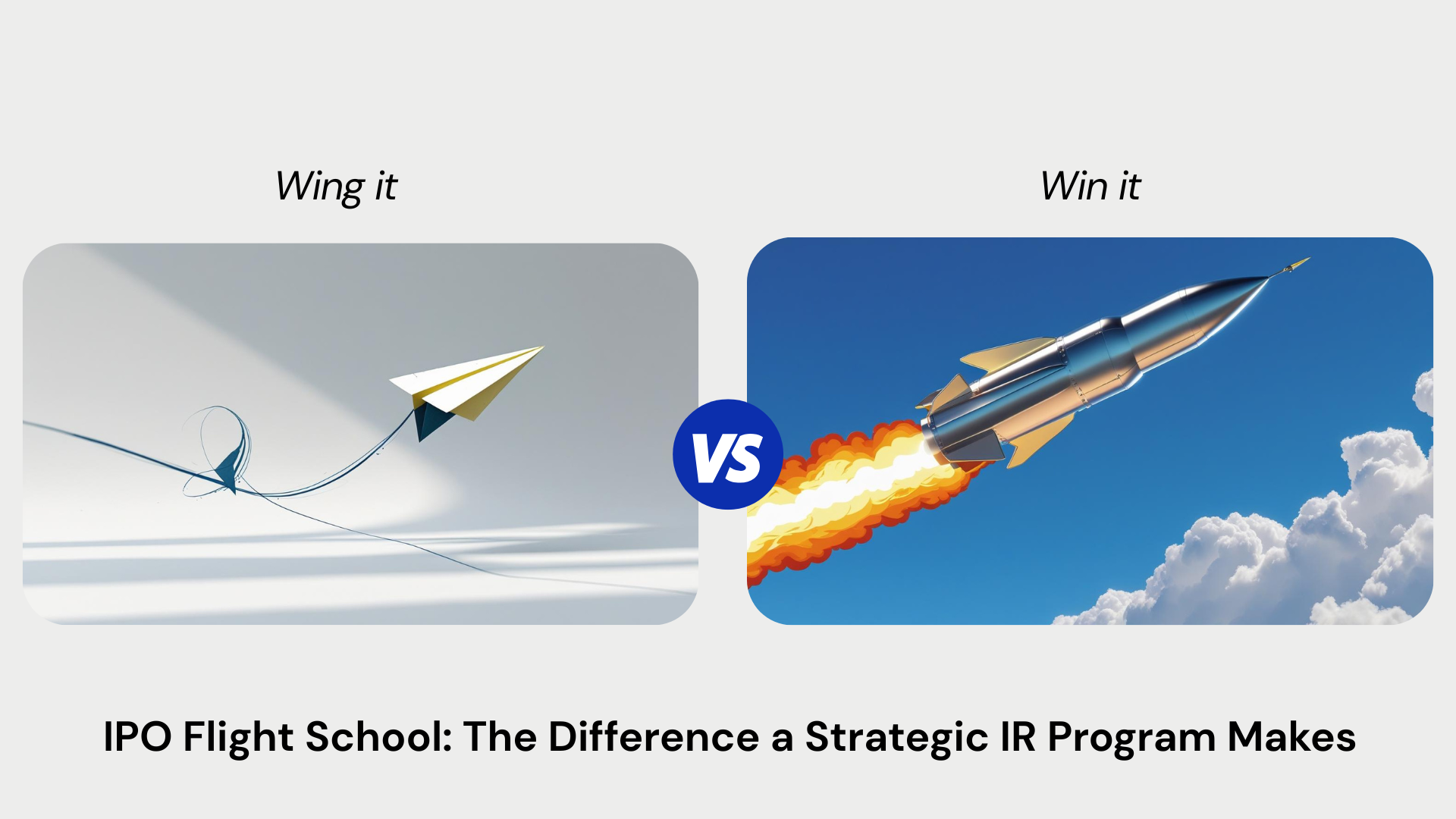
Every public CFO knows the importance of building a strategic investor relations playbook when taking their company public.
The problem? Most only realize how much after hindsight kicks in.
As someone who has built IR programs for IPO-bound companies, I’ve seen the difference between CFOs who “wing it” and those who “win it.” Here’s what the winning approach looks like.
1. Your numbers alone don’t speak for themselves
Strong financials aren’t enough. You need to articulate a cohesive investor narrative that explains not just past performance, but how you’ll deliver growth going forward. Your equity story should clearly reflect your long-term strategy, how your competitive advantages position your company to win, and it should be memorable and easy to repeat.
2. Your disclosure framework is your flight plan
Once you’re public, it’s hard to rewrite it mid-flight. When drafting the S-1, it’s tempting to cherry-pick disclosures, but they may not be the same KPIs you want to disclose on a quarterly basis after your company becomes public. Align your disclosure framework early – before the S-1 locks you into KPIs you may regret reporting every quarter.
3. Earnings guidance shapes your management culture
Guidance isn’t just about managing Wall Street expectations. It can influence product release dates, sales cycles, and internal accountability. Get clear on your earnings guidance framework before you go live. This is why when working with IPO clients, we make sure to explicitly write down together a guidance policy and build a guidance model as part of the full earnings preparation test run prior to going public.
4. Relationships compound over many trips
Investor confidence comes from consistently engaging with analysts and investors over time, saying what you’re going to do, then demonstrating you’re on your way to delivering stellar results by highlighting the right milestones and metrics in your journey. Roadshows and one-off meetings aren’t enough – spend time building trust with influential sell-side analysts and long-term investors who can advocate for you.
5. Build a jetliner crew, not a two-seater team
An IPO is often treated like a one-off project, but CFOs quickly realize this is short-sighted and raises your company’s risk. Post listing, the expectations from investors and internal stakeholders are on a different scale. Your target investor profile changes significantly, which requires a thoughtful targeting plan, while, internally, your board and CEO expect insightful and timely market intelligence. A lean IR team supported by seasoned advisors positions you for the heavier lift of quarterly reporting and the higher level of investor interest. Just as importantly, strong IR systems and processes from the start signal consistency and transparency – building trust over time.
Your first earnings call sets the tone for years to come. Don’t wing it. Build the IR playbook that wins investor confidence from the start.
I write about business strategy and finance. If you found this helpful, please share it. I appreciate your support.
Learn more about how I help clients build their investor relations playbook here.